Travel to Croatia
Day 10 Krk - Vrbnik - Stara Baška - Pula (211 Km.)
Krk is the largest island in the Adriatic and one of the few in Croatia that is connected to the mainland by a bridge, making it easily accessible by car. The Krk Bridge, an impressive concrete structure spanning over 1,400 meters, allows visitors to cross from the mainland into a land of breathtaking landscapes, historic towns, and stunning beaches. Known as the "Golden Island" due to its rich cultural heritage and natural beauty, Krk offers a mix of medieval charm, crystal-clear waters, and excellent local cuisine. With so much to see and do, we were eager to explore its hidden gems and immerse ourselves in its history and scenery.

Krk - Vrbnik
(in 14 Km.) Vrbnik: Our journey on Krk Island began in the picturesque town of Vrbnik, perched on a cliff overlooking the Adriatic Sea. This medieval village is famous for its narrow, winding streets—one of which is said to be the narrowest in the world. We wandered through its stone alleys, admiring the charming old houses and stunning sea views. Vrbnik is also home to the Church of the Assumption of the Blessed Virgin Mary, a historic building with origins dating back to the 14th century. Its elegant bell tower, visible from many points in the town, is one of Vrbnik’s most recognizable landmarks. Inside, we found beautiful Baroque altars and a 13th-century Gothic crucifix, evidence of the town’s long religious tradition. Vrbnik is also known for its Žlahtina white wine, a local specialty. The peaceful atmosphere and the scent of the salty breeze made it the perfect introduction to the island’s unique character.

Vrbnik - Narrowest street in the World
(in 20 Km.) Stara Baška: After exploring Vrbnik, we headed south to Stara Baška, where we planned to spend some time at Oprna Bay, one of the most beautiful beaches on the island. Reaching it, however, was an adventure in itself. We had to leave our car on the side of the road and make our way down a steep, rocky slope. The descent was a bit challenging, but the sight of the crystal-clear, turquoise waters below made every step worth it. Once we reached the beach, we were greeted by a peaceful cove surrounded by rugged cliffs, with soft pebbles underfoot and water so clear that we could see fish swimming around us. We spent the afternoon swimming and relaxing in this hidden paradise, far from the crowds.

Krk - Stara Baška - Oprna Bay
(in 21 Km.) Krk: Before leaving Krk Island, we passed through the town of Krk, the island’s largest settlement. As we drove along the coast, we admired the impressive stone walls that once protected the city from invaders. The town’s history dates back to Roman times, and its well-preserved medieval core is filled with historic landmarks, including the Frankopan Castle and the Cathedral of the Assumption. Even though we didn’t have time for a long visit, the sight of its ancient streets and harbor gave us a taste of its rich past. Crossing the Krk Bridge, which connects the island to the mainland, we took one last look at the shimmering sea before continuing our journey north.
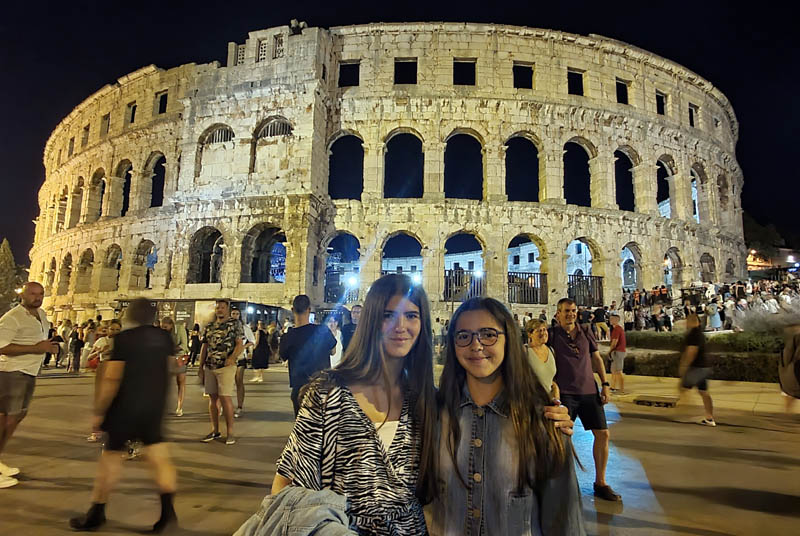
Pula - Roman Amphitheater by night
(in 156 Km.) Pula: Our final stop of the day was Pula, where we arrived just in time to see its majestic Roman amphitheater illuminated against the night sky. The Pula Arena, one of the best-preserved Roman amphitheaters in the world, stood as a breathtaking reminder of the city’s ancient past.

Pula - Roman Amphitheater by night
After taking in the magical view, we headed to Pizzeria Jupiter, a popular local spot known for its delicious truffle-based dishes. The region of Istria is famous for its truffles, so we couldn’t resist ordering a truffle pizza (Tartufo) and pasta with truffle sauce. It was the perfect way to end our day, enjoying amazing food and reflecting on our incredible time exploring Krk Island and beyond.